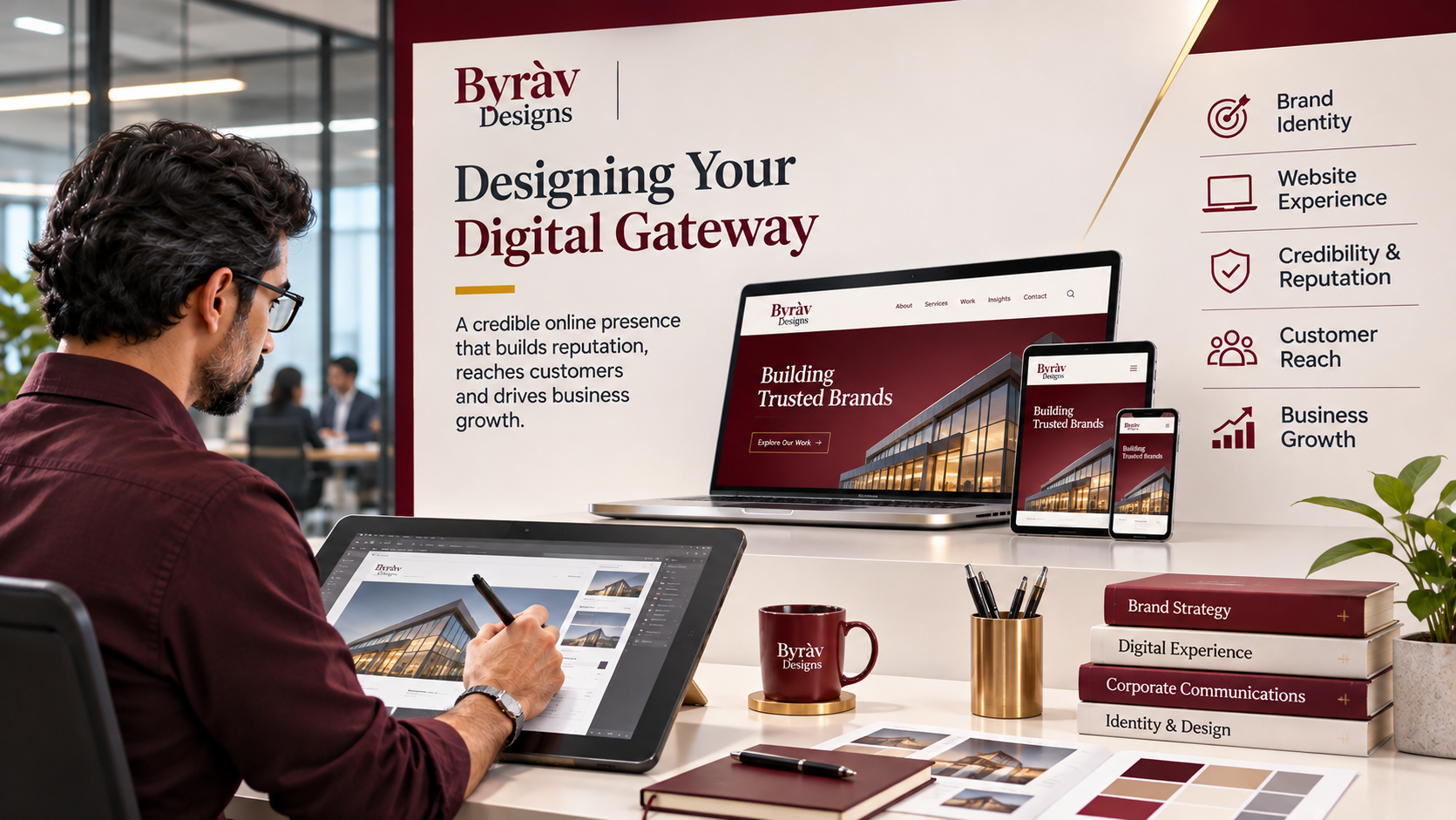


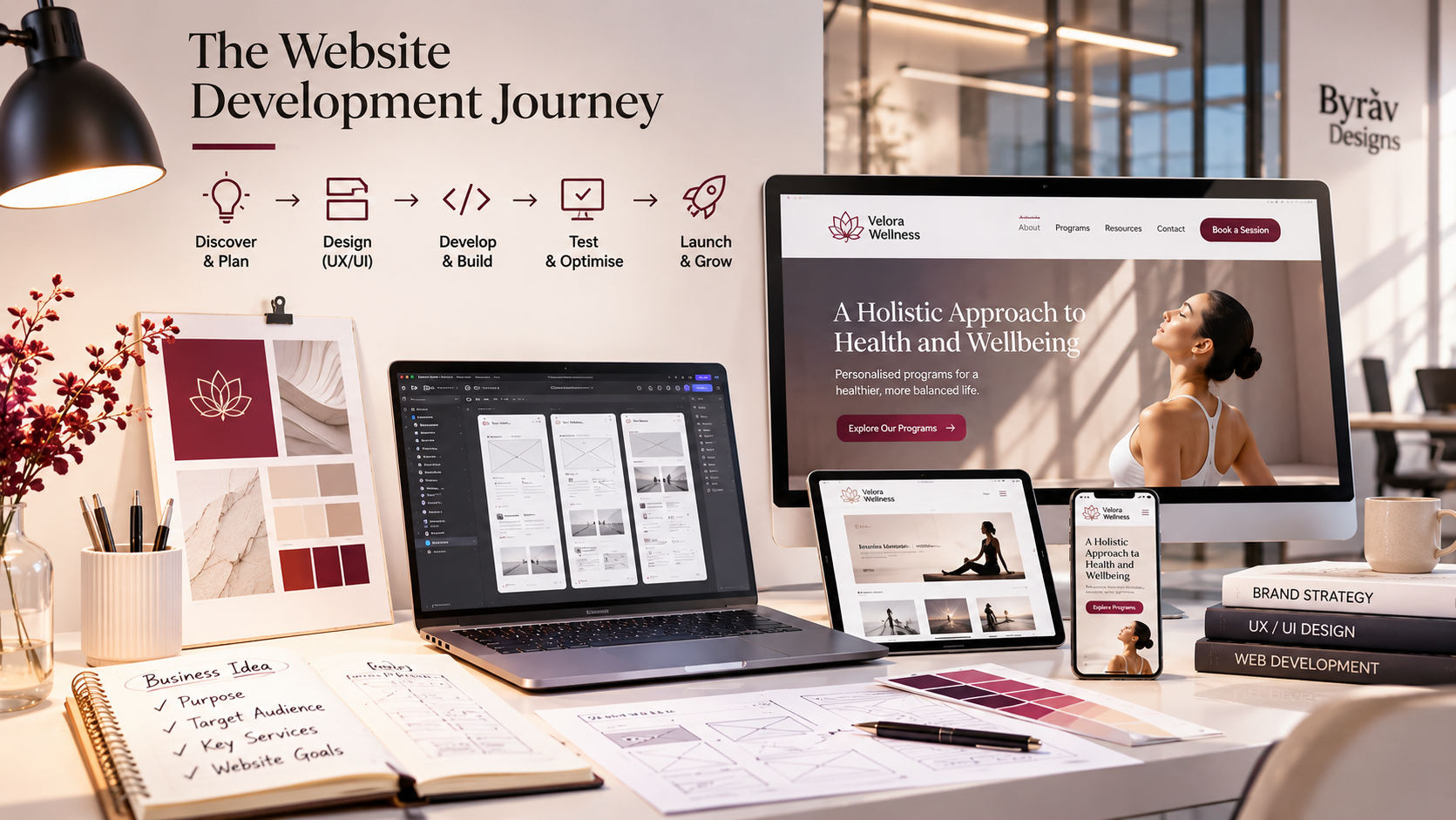
Understanding website design pricing, project scope and the difference between purchasing a website and investing in a digital brand experience.
Website design cost Singapore is a common search for business owners planning a professional digital presence. In 2026, website development costs can vary considerably depending on design complexity, content, functionality and brand requirements. Website design cost in Singapore can range from approximately S$1,000 for a simple informational website to S$15,000 or more for a professionally developed corporate website. Ecommerce platforms and complex custom projects can cost substantially more. The final investment depends on design complexity, content, functionality, brand development and implementation requirements.
For business owners, however, the more important question is not simply how much a website costs.
It is what the organisation receives in return for that investment.
Two website design proposals may differ considerably in price while appearing to promise similar outcomes.
Understanding those differences can help businesses make better decisions, avoid unnecessary expenditure and commission a digital experience that supports their long-term objectives.
This guide examines website design costs in Singapore, the factors influencing quotations and how businesses should evaluate the value of professional website development.
1. Website Design Cost Singapore: How Much Should Businesses Budget in 2026?
Website design pricing varies according to the type of website and the services included.
Publicly available Singapore pricing guides published in 2026 indicate the following broad reference ranges.
| Website type | Indicative project cost (SGD) |
|---|---|
| Basic informational website | S$1,000–S$3,000 |
| Small business website | S$2,000–S$8,000 |
| Professional corporate website | S$5,000–S$15,000+ |
| Ecommerce website | S$5,000–S$30,000+ |
| Complex custom digital platform | S$15,000–S$50,000+ |
These figures are indicative market ranges synthesised from publicly available Singapore agency guides. They are not Byràv Designs’ quotations, fixed industry benchmarks or guaranteed prices. Scope, provider, inclusions and taxes may differ.
For reference, see the published pricing analyses from Upscaled, Singapore Digital Marketing and xSquare.
These sources illustrate why broad pricing comparisons need to be treated carefully.
A business purchasing a five-page template-based website is not commissioning the same type of work as an established organisation seeking a distinctive corporate website integrated with its broader brand strategy.
The number of pages alone does not determine the value or cost of a website.
2. What Determines the Cost of Professional Website Design?
Website design costs generally reflect the complexity and scope of the engagement.
Several factors have a particularly significant influence.
Business Discovery and Strategic Planning
Some website projects begin with a clearly defined brief.
Others require the design partner to establish the website’s purpose, target audiences, content priorities and relationship with the organisation’s broader positioning.
Strategic discovery may involve stakeholder discussions, competitive analysis, audience understanding and information architecture.
This work can be particularly valuable when the organisation is repositioning, entering new markets or expanding its range of services.
Custom Design Versus Template-Based Design
Template-based websites typically use established design structures with configurable colours, typography and layouts.
This approach may be appropriate for businesses with straightforward requirements.
Custom website design involves developing layouts, interaction patterns and visual systems specifically for the organisation.
Customisation may be particularly important when the website must communicate a distinctive identity, accommodate complex information or create a carefully considered customer experience.
However, custom design is not automatically necessary for every business.
The correct decision depends on what the website must achieve.
Brand Identity and Visual Communication
A business with an established brand identity can provide its design partner with existing guidelines, assets and messaging.
A company without a coherent identity may first need to clarify its visual language, communication style or brand positioning.
These activities are distinct from website development.
When brand strategy and website design are commissioned together, the scope naturally becomes broader.
Understanding why branding is a strategic business asset can help organisations determine whether their project requires website implementation alone or a more integrated branding exercise.
Content Development
A website requires more than visual layouts.
Service descriptions, corporate information, product details, case studies and other content must be organised into a coherent experience.
Some agencies expect clients to provide completed content.
Others include information architecture, copywriting, editing and content migration.
The difference can substantially affect both the quotation and the project’s timeline.
Technical Development and Integrations
A straightforward informational website generally involves less development complexity than a platform requiring customer accounts, payment processing, booking systems, multilingual content or integration with business applications.
Costs may also increase when a project requires specialised security controls, complex workflows or custom functionality.
Testing, Accessibility and Performance
Professional website development should account for functionality across devices and browsers.
Accessibility, mobile usability, performance and maintainability should be considered during project planning.
The World Wide Web Consortium’s Web Content Accessibility Guidelines (WCAG) 2.2 provide a widely recognised reference for accessible digital experiences.
These considerations should be addressed as part of the website’s design and implementation—not treated merely as optional finishing touches.
3. Why Can Two Website Design Quotations Be So Different?
Consider two businesses requesting a ten-page corporate website.
The first quotation may include a standard theme, basic page setup, client-supplied content and deployment.
The second may include business discovery, information architecture, custom design, content refinement, mobile optimisation, technical testing and post-launch support.
Both may describe the final deliverable as a ten-page website.
Yet the underlying work is fundamentally different.
This is why comparing quotations exclusively by price or page count can be misleading.
A more useful evaluation considers five dimensions:
Scope: What work is included and excluded?
Expertise: Which disciplines contribute to the project?
Customisation: How much of the experience is specifically developed for the business?
Ownership: What will the organisation control after launch?
Long-term suitability: How easily can the website evolve as the business grows?
For a more detailed evaluation framework, read our guide on how to choose the best website design company in Singapore.
4. Website Design Cost vs Website Value
The least expensive website is not always the most economical choice.
Equally, an expensive website does not automatically produce better business outcomes.
The distinction is between the initial cost of development and the value the website provides over time.
A website may support business value by helping visitors understand the company’s services, strengthening brand credibility, improving the customer experience or making information easier to access.
In some cases, it may also support enquiries, product transactions or other measurable business activities.
However, these outcomes depend on the broader business context.
Website design alone cannot guarantee increased sales, improved search rankings or stronger brand recognition.
A credible design partner should explain how its recommendations relate to the organisation’s objectives and which results can realistically be measured.
5. Should You Choose a Freelancer, Website Agency or Strategic Design Consultancy?
The type of provider can influence both cost and project approach.
Freelance Website Designer
A freelance designer may be appropriate when the project has a clear scope, limited technical complexity and well-defined content requirements.
This can provide flexibility for smaller engagements.
However, businesses should establish how development, content, technical support and long-term maintenance will be managed.
Website Design Agency
A website design agency may offer a broader combination of design, development and implementation capabilities.
This can be useful for organisations requiring a coordinated project involving multiple disciplines.
The actual services included will vary by agency.
Strategic Branding and Digital Design Consultancy
Some organisations require more than a website.
They may need to refine their brand positioning, corporate identity, digital communication or broader customer experience.
In such cases, a consultancy combining brand strategy, identity development and digital design may be appropriate.
The important distinction is not which provider category is inherently better.
It is whether the provider’s capabilities match the actual business problem.
6. What Are the Hidden Costs of Building a Website?
The quoted website development fee may not represent the full cost of ownership.
Businesses should clarify both initial and recurring expenses before commissioning a project.
| Cost category | What to clarify |
|---|---|
| Domain registration | Renewal fees and ownership |
| Hosting | Annual subscription, performance and support |
| SSL and security | Certificates, monitoring and maintenance |
| Premium plugins | Licence renewals and third-party dependencies |
| Content updates | Whether routine changes are included |
| Technical maintenance | Software updates, backups and issue resolution |
| Integrations | Third-party subscription or transaction fees |
| Future development | Costs associated with new pages or functionality |
| Training | Whether the internal team can manage the website |
For ecommerce websites, payment processing and platform-related transaction fees may also apply.
A transparent proposal should identify these costs wherever reasonably possible.
It should also explain who is responsible for maintaining the website after launch.
7. Does Website Design Include SEO and AI Search Readiness?
Not necessarily.
Search engine optimisation, content strategy and AI-search discoverability may involve work that extends beyond website development.
However, a professionally developed website should establish a sound technical and structural foundation.
This includes clear navigation, crawlable content, descriptive page titles, appropriate internal linking, responsive design and usable page experiences.
Google’s official guidance for AI features in Search explains that established SEO best practices remain relevant for AI-assisted search experiences.
Businesses should therefore ask whether their proposed website supports the clear communication of services, expertise and other information that visitors and search systems need to understand.
For example, a business owner might ask an AI assistant:
“Which website design company in Singapore would be suitable for a premium corporate brand?”
Or:
“How much should I budget for a corporate website with brand strategy and professional design?”
These conversational searches highlight the value of content that addresses real business questions clearly.
Nevertheless, no website design provider can guarantee inclusion in AI-generated answers or specific Google rankings.
8. How Much Should an Established Business Budget for a Corporate Website?
An established business should begin with its requirements rather than selecting an arbitrary price bracket.
A relatively straightforward corporate website may require clear communication, responsive layouts, professional design and reliable content management.
A more complex engagement may involve multiple stakeholders, several service lines, specialised content, brand repositioning or technical integrations.
Before requesting quotations, prepare a concise project brief covering:
- Business objectives and intended audiences.
- Existing brand identity and whether it requires refinement.
- Required pages and content.
- Functional and technical requirements.
- Website management responsibilities.
- Expected launch timeline.
- Budget parameters and procurement requirements.
This will help potential partners propose solutions based on a consistent understanding of the project.
It also makes quotations easier to compare.
9. How to Evaluate Whether a Website Design Proposal Is Worth the Investment
A useful evaluation framework should examine more than cost.
Consider the following criteria:
Strategic Fit
Does the provider demonstrate an understanding of the business and the objectives of the website?
Design and User Experience
Does the proposed approach support clear communication, intuitive navigation and a coherent brand experience?
Technical Quality
Are implementation, responsiveness, performance, accessibility and maintainability adequately addressed?
Project Transparency
Are deliverables, milestones, responsibilities and exclusions clearly defined?
Long-Term Value
Will the organisation be able to maintain, update and expand the website without unnecessary dependence on the original provider?
Businesses can use these criteria to compare proposals objectively while retaining flexibility for different project requirements.
10. Frequently Asked Questions
How much does a website cost in Singapore in 2026?
Indicative published market ranges suggest that simple business websites may cost approximately S$1,000–S$3,000, while more developed corporate websites may cost S$5,000–S$15,000 or more. Ecommerce and complex custom platforms can require substantially larger budgets. Actual pricing depends on scope and inclusions.
What is the average website design cost for a small business in Singapore?
Public pricing guides commonly describe small-business website projects in the approximate S$2,000–S$8,000 range, although simpler template-based sites can cost less. Businesses should verify what is included in each quotation rather than relying on the average alone.
Why is custom website design more expensive?
Custom design may require additional discovery, user experience planning, visual design, content development and technical implementation. The additional cost should be justified by requirements that cannot be adequately addressed using a standard template.
Is a S$10,000 website worth the investment?
It depends on what the website must accomplish and what the quotation includes. A S$10,000 corporate website may be appropriate when professional content, tailored design, brand alignment and technical implementation are required. The amount alone does not establish value.
Does website design pricing include branding?
Not always. Some providers focus primarily on website implementation, while others include brand strategy, visual identity or content development. These elements should be clearly identified in the proposal.
How much does an ecommerce website cost in Singapore?
Published Singapore guides frequently place professionally developed ecommerce websites within a broad range of approximately S$5,000–S$30,000 or more. Catalogue complexity, payment integrations, fulfilment requirements and custom features can significantly influence the final cost.
Can a professional website help my business appear in ChatGPT or Google AI Search?
A well-structured, informative and technically accessible website can support discoverability. However, visibility in AI-generated answers depends on the platform, query and available information. No agency can guarantee recommendations or citations.
What should I ask before hiring a website design company?
Ask about the proposed scope, brand alignment, content responsibilities, development approach, ownership, accessibility, testing, recurring costs and post-launch support. Request examples of completed work relevant to your business.
Conclusion: Invest in the Website Your Business Actually Needs
Website design cost in Singapore should be evaluated in the context of business objectives, project complexity and the long-term role of the digital experience.
A website is not simply a collection of pages.
It communicates the organisation’s identity, supports customer interactions and forms part of a broader system of business communication.
For companies investing in their digital presence, the most useful question is not necessarily:
“How much should a website cost?”
It is:
“What kind of website does our business need, and what investment is appropriate to achieve it?”
At Byràv Designs, we approach digital brand experiences as an extension of business strategy, brand identity and thoughtful design.
Our focus is on helping organisations create coherent digital experiences that communicate clearly and reflect the quality of the businesses behind them.
For organisations evaluating a new website or reviewing an existing digital presence, a strategic discussion can help establish the appropriate priorities before design and implementation begin.
Explore Byràv Designs: www.byravdesigns.com
Discuss your project: Contact Byràv Designs