

If you’ve been diving into SEO lately, you’ve probably stumbled across the terms “on-page SEO” and “off-page SEO.” Honestly, they might sound a bit like marketing jargon at first. But here’s the thing—they actually describe two pretty different (yet equally crucial) approaches to getting your website noticed online.
I like to think of your website as a local shop:
On-page SEO? That’s how well your shop is set up inside—you know, clear signs, products that aren’t scattered everywhere, staff who actually know what they’re talking about, and doors that don’t stick when people try to enter.
Off-page SEO is more like your street cred around town. Are people recommending you to their friends? Did the local paper mention your business? Do folks trust you enough to send customers your way?
Here’s what I’ve learned: without solid on-page work, visitors might walk into your shop and immediately want to leave. But without off-page signals, most people won’t even know your shop exists in the first place.
Let me break down what each one actually involves.
What is On-Page SEO?
On-page SEO appears to be the art of tweaking everything within your website so search engines can figure out what you’re actually talking about—and so real people have a decent time browsing around.
Key On-Page SEO Factors:
Content Optimization
Search engines seem to favor content that actually answers what people are searching for. Rather than cramming keywords everywhere (which honestly feels pretty spammy), it’s better to focus on creating stuff that’s genuinely helpful and interesting.
Take this example: someone types “best coffee machines under $200” into Google. Your content should probably dive into affordable coffee makers, maybe include some real product reviews, and tackle those questions buyers always have—like whether a $150 machine will actually last more than six months.
Keywords & Semantic SEO
Modern SEO isn’t just about repeating the same phrase over and over. Google’s gotten smarter about understanding context through related terms. So if you’re writing about SEO, sprinkling in phrases like “ranking factors,” “organic search,” or “search visibility” helps Google grasp what you’re really discussing.
Title Tags & Meta Descriptions
These show up when people see your site in search results. A good title catches someone’s eye, while the meta description is what convinces them to actually click through. Think of it as your elevator pitch in about 160 characters.
Header Tags (H1, H2, H3, etc.)
Breaking your content into clear sections makes it easier to read—and it helps those search engine crawlers scan through your page without getting lost.
URL Structure
Shorter URLs with relevant keywords just work better. Compare these two:
✅ example.com/on-page-seo-guide
❌ example.com/article?id=3245&cat=seo
The first one tells you exactly what to expect. The second? Not so much.
Internal Linking
When you link to other relevant pages on your site, you’re essentially giving visitors a guided tour while helping search engines understand how your content connects.
User Experience (UX)
If your site takes forever to load, looks terrible on phones, or has confusing navigation, people bounce. Fast. And Google notices those quick exits.
Here’s a practical example: an online store might boost their on-page SEO by writing detailed product descriptions (not just “great quality!”), adding multiple product photos, featuring real customer reviews, and creating logical category links between related items.
What is Off-Page SEO?
Off-page SEO is essentially everything that happens away from your website that might influence how trustworthy and authoritative you appear to search engines. It’s about building your reputation across the broader web.
Key Off-Page SEO Factors:
Backlinks (Link Building)
This is still the big one. When respected websites link to your content, it’s like getting a recommendation from someone Google already trusts. Quality definitely trumps quantity here—one link from a well-regarded industry site is worth more than dozens from random blogs.
Domain Authority & Page Authority
SEO tools like Moz created these metrics to estimate how strong your backlink profile is. Sites with higher authority scores tend to rank better, though it’s worth noting these are third-party metrics, not something Google officially uses.
Social Media Signals
Likes and shares probably don’t directly boost your rankings, but they can expand your reach and sometimes lead to those valuable organic backlinks when the right people notice your content.
Guest Posting & Collaborations
Writing for other reputable sites introduces your brand to new audiences and often nets you quality backlinks. Though you’ll want to be selective—guest posting on questionable sites can actually hurt you.
Local SEO & Citations
If you’re serving a specific area, getting listed on Google Business Profile, Yelp, and local directories matters a lot. Keep your NAP details (Name, Address, Phone number) consistent everywhere—inconsistencies seem to confuse both search engines and potential customers.
Brand Mentions
Even when there’s no clickable link, mentions on trusted websites signal to Google that your brand is relevant in your field. It’s like digital word-of-mouth.
Real example: when TechCrunch reviewed a startup’s app and linked to their website, Google likely interpreted that as a strong trust signal and rewarded their rankings accordingly.
How Search Engine Optimization Actually Works
Both on-page and off-page are really just two sides of the Search Engine Optimization. On-page work ensures your site is well-organized and matches what people are actually searching for. Off-page builds those external trust signals that convince search engines your site deserves a higher spot.
When they work together, you get something like this:
On-page SEO = relevance + quality
Off-page SEO = authority + trust
The catch? Neither approach works particularly well on its own. You could have perfectly optimized pages that never outrank competitors because you lack backlinks. Or you might earn strong links, but if your site loads like molasses and your content is thin, visitors won’t stick around long enough to matter.
The Core Difference
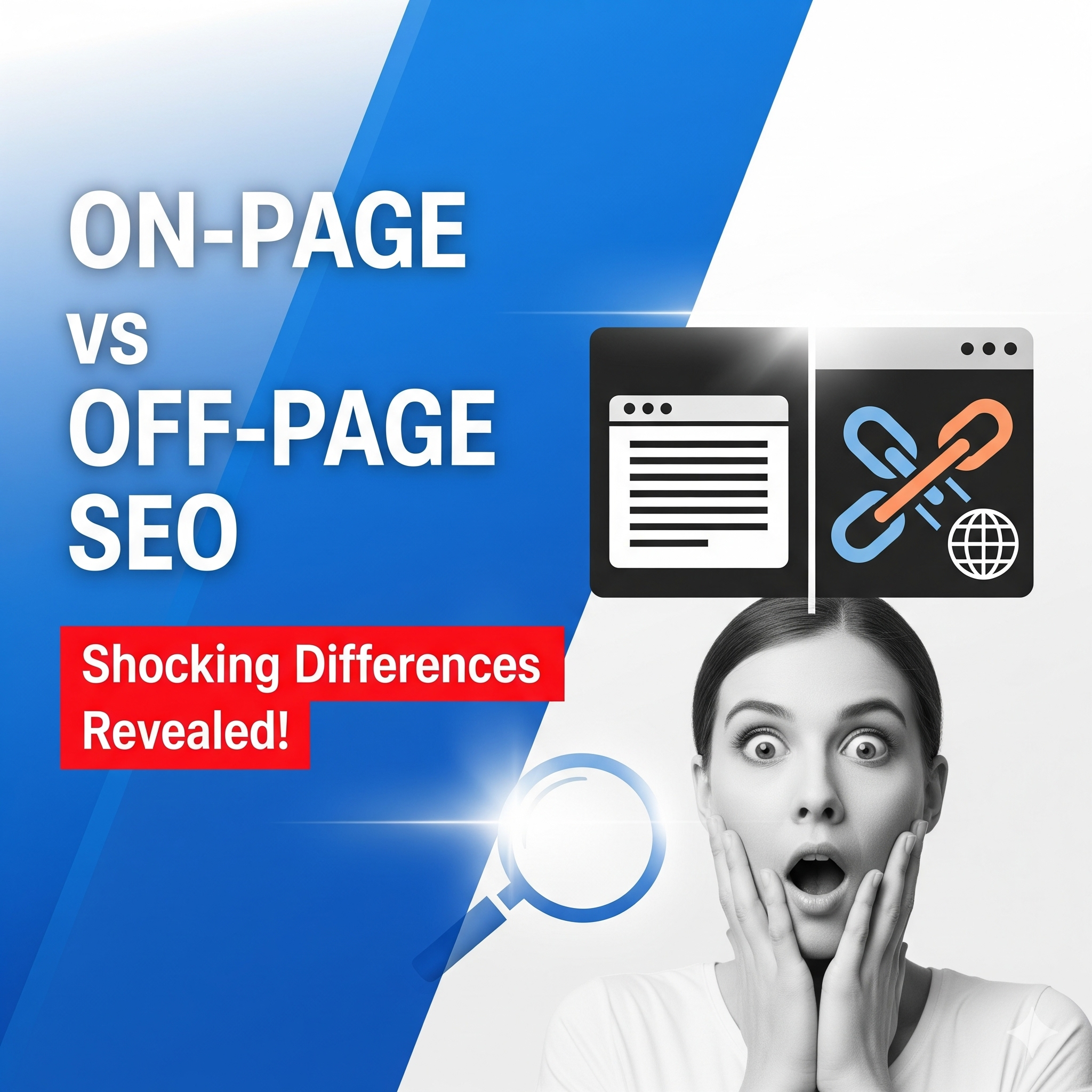
On-Page SEO = What you control inside your site (content, structure, user experience)
Off-Page SEO = What happens outside your site (backlinks, mentions, citations)
They’re more like dance partners than competitors—each one makes the other more effective.
Why You Probably Need Both
Only On-Page SEO = A well-organized site that nobody knows about
Only Off-Page SEO = Authority without substance
What seems to work best is this cycle:
Create high-quality, optimized content → promote it to earn backlinks and mentions → track what’s working → adjust your approach → repeat.
This balance appears to improve search visibility over time and builds something more sustainable than quick SEO tricks.
Common Questions About On-Page vs Off-Page SEO
Which is more important: on-page or off-page SEO?
Both, really. On-page helps Google understand what your site covers, while off-page suggests why your site should rank higher than others covering similar topics.
Can I see results quickly?
On-page changes like fixing meta tags or improving site speed might show results within a few weeks. Off-page SEO usually requires months of consistent work before you notice significant changes.
Can I rank without backlinks?
Possibly, but mainly for keywords that aren’t very competitive. In crowded industries, backlinks seem almost essential for breaking through.
Does social media actually help SEO?
Not directly through rankings, but it can expand your reach and drive traffic. Plus, when your content gets shared widely, it sometimes catches the attention of bloggers or journalists who might link to it.
What on-page SEO mistakes do people make most often?
The most common On-Page SEO mistakes include keyword stuffing (it’s pretty obvious when someone does this), creating thin content that doesn’t provide value, having duplicate pages, ignoring mobile usability, and slow loading speeds. Addressing these issues can significantly improve both user experience and search rankings.
Besides backlinks, what else counts as off-page SEO?
Getting mentioned in industry publications, managing your online reviews, partnering with influencers in your field, and making sure you’re listed in relevant directories.
How do I know if my SEO efforts are actually working?
Track your organic rankings, watch for increases in organic traffic, monitor bounce rates, and measure conversions. Tools like Google Analytics, Search Console, Ahrefs, or SEMrush can help, though each has its own quirks.
Final Thoughts
The whole on-page vs off-page SEO discussion isn’t really about picking a side—it’s about figuring out how to use both effectively. On-page work builds that foundation of relevance and user experience. Off-page builds the reputation and authority you need to actually compete.
Put simply:
On-page = what you control inside your website
Off-page = your reputation outside your website
When these two approaches work together well, they tend to create the kind of SEO strategy that not only boosts rankings but actually sustains them over time.