

Packaging design Singapore businesses invest in can influence how consumers notice products, evaluate quality and make purchasing decisions in competitive retail environments.
For businesses investing in packaging design in Singapore, the challenge is no longer simply to create an attractive box, bottle, label or wrapper.
The packaging must communicate a product’s identity, differentiate it in a competitive environment and provide the information customers need to make a decision.
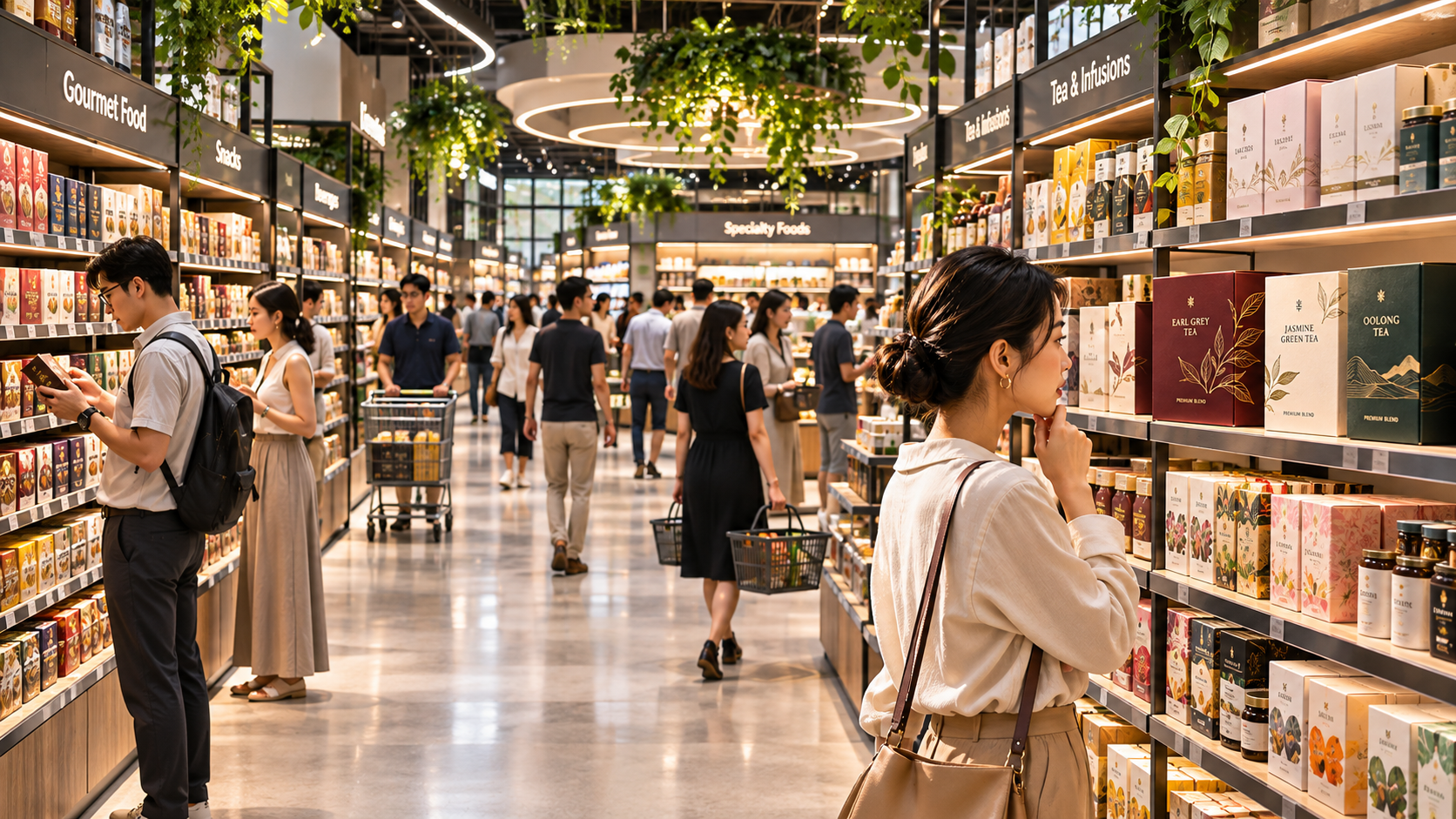
Consider a shopper standing in front of a shelf containing several products with similar ingredients, functions and prices.
The customer may have little prior experience with the brands.
One package appears carefully considered, with clear information, distinctive typography and a coherent visual identity.
Another is crowded with claims, inconsistent graphics and competing messages.
Even before examining the products themselves, the customer has begun forming impressions.
Those impressions do not determine the final purchase on their own. Price, familiarity, product performance, availability and personal preference also matter.
But packaging can influence which product receives attention and how it is evaluated.
Packaging is therefore more than a container. It is one of the most immediate forms of communication between a product and its prospective customer.
Understanding this relationship can help businesses approach packaging as part of their wider brand and product strategy rather than an isolated graphic design assignment.
Packaging Design Singapore: What Influences Consumer Choices?
Packaging design matters because it helps consumers recognise, understand, compare and evaluate products at the point of consideration.
It performs several functions simultaneously.
It protects and contains the product.
It communicates essential information.
It expresses the product’s brand identity.
It helps distinguish one offering from competing alternatives.
It can also shape expectations about quality, usability, value and the overall experience.
These different functions become especially important when consumers have limited information or little previous experience with a product.
A first-time customer evaluating a skincare product, for example, may use its packaging to understand the product category, intended use, ingredients and positioning.
A customer comparing gift products may attach greater importance to presentation and the experience of opening the package.
Someone purchasing everyday food may prioritise product information, familiarity, convenience and price.
The same packaging approach will not work equally well for every category or buying situation.
A 2026 meta-analysis published in the Journal of the Academy of Marketing Science, titled Unpacking Packaging: A Meta-analysis on the Effects of Visual Packaging Elements, synthesised evidence across 280 studies.
The research examined packaging elements including colour, shape, size, materials, imagery, logos and typography.
An important finding was that the influence of these elements depends on what is being measured. Design features that attract attention or shape perceptions do not necessarily have the same effect on purchasing behaviour.
This distinction is important for business leaders.
The objective should not simply be to create packaging that looks distinctive.
It should be to understand what the packaging needs to help the customer notice, understand and decide.
How Does Packaging Influence the Customer’s Purchase Journey?
Packaging can influence several stages of the purchasing process, from initial attention through post-purchase experience.
To understand this relationship, it is useful to consider five questions that customers may answer—consciously or unconsciously—when encountering a product.
1. Attention: What Makes the Customer Notice the Product?
Before a consumer can evaluate a product, it must attract sufficient attention.
In a crowded retail environment, consumers encounter numerous visual elements competing for recognition.
Colour, shape, scale, typography, imagery and package structure can all influence whether a product stands out.
However, distinction should not be confused with visual excess.
A package does not necessarily become more effective because it uses brighter colours, more decorative elements or larger typography.
Sometimes restraint can create contrast.
Imagine a shelf filled with colourful, information-heavy packages.
A product with a carefully balanced, understated design may become noticeable precisely because it looks different from its surroundings.
In another category, a bold and expressive identity may be more appropriate.
The key question is not whether the packaging is loud or quiet.
It is whether it is visually distinctive in the context where the customer will encounter it.
For businesses developing a new product, this requires an understanding of competing packaging styles and typical customer expectations.
A design should be evaluated alongside relevant alternatives, not only as an isolated presentation on a computer screen.
2. Interpretation: What Does the Customer Think the Product Is?
Once a product attracts attention, packaging helps the customer understand what it offers.
A package may communicate product category, purpose, features, ingredients, quantity, intended use or differentiating characteristics.
The hierarchy of information matters.
If several claims compete for attention, the consumer may struggle to determine what is most important.
Consider a hypothetical functional beverage.
Its packaging might need to communicate the brand, product type, flavour, volume and relevant product attributes.
If the design emphasises an abstract brand story while making the actual product difficult to identify, it may introduce unnecessary confusion.
Good packaging does not need to explain everything at once.
It needs to establish an understandable sequence of information.
The primary message should be clear before the customer needs to investigate the details.
This principle is closely connected to information architecture in digital design.
Just as a corporate website should help visitors understand a business, product packaging should help customers understand an offering.
3. Evaluation: What Quality Does the Customer Expect?
Packaging can influence product expectations before the product is opened or used.
The choice of materials, finish, structure and visual language may suggest different levels of quality or different product characteristics.
For example, a premium fragrance might use carefully proportioned packaging, refined typography and a controlled material palette.
An everyday household product may communicate value through clarity, practical information and an approachable visual identity.
Neither approach is universally superior.
The design should reflect the product’s actual positioning and intended customer.
This relationship between appearance and expectation is also why packaging can become problematic when it promises an experience that the product does not deliver.
An elaborate presentation may create high expectations.
If the product experience falls substantially short, packaging may amplify disappointment rather than build long-term trust.
The most useful packaging design aligns perceived value with the genuine value of the product.
4. Selection: Why Would the Customer Choose This Product?
At the point of comparison, consumers may evaluate several similar products.
Packaging can help explain the differences.
A clearly presented value proposition may communicate a product’s intended benefit.
Recognisable branding may reinforce familiarity.
Useful information may reduce uncertainty.
Distinctive presentation may help the product remain memorable.
However, visual appeal alone does not guarantee selection.
A consumer may prefer a familiar brand, choose a lower-priced alternative or prioritise a specific product attribute.
Packaging should therefore support the customer’s decision rather than attempt to replace the substance of the offering.
This is particularly important for unfamiliar brands entering competitive markets.
The package may need to achieve several objectives in a short encounter: establish identity, explain relevance and provide sufficient confidence for consideration.
5. Experience: What Happens After the Product Is Purchased?
Packaging continues to communicate after the purchase.
The customer may encounter it during transport, storage, opening, use and disposal.
Practical features become important at this stage.
Is the package easy to open?
Does it protect the product?
Can it be stored conveniently?
Are instructions understandable?
Does the physical experience reflect the promise communicated before purchase?
The unboxing experience may also matter for certain product categories, particularly gifts, premium consumer goods and products purchased directly from online stores.
But unboxing should not become an excuse for unnecessary materials or complexity.
A thoughtful packaging experience balances presentation with practical usefulness.
The purchase may be completed at the checkout, but the customer’s experience of the brand continues afterwards.
What Packaging Design Elements Influence Consumer Perception?
Several design elements contribute to how packaging is perceived.
Their relative importance depends on the product category, customer expectations and purchasing environment.
| Packaging element | What it can communicate |
|---|---|
| Colour | Recognition, contrast, character and category associations |
| Typography | Brand personality, information hierarchy and readability |
| Shape and structure | Distinctiveness, convenience and product expectations |
| Material | Tactile experience, durability and perceived quality |
| Imagery | Product characteristics, intended use and visual appeal |
| Brand identity | Recognition and continuity across products |
| Information layout | Clarity, confidence and ease of comparison |
These elements should not be considered independently.
A package using an elegant typeface but poor information hierarchy may still be difficult to understand.
A distinctive structure may attract attention but create storage or production challenges.
An expensive material may appear sophisticated but be inappropriate for the product’s use or positioning.
Effective packaging depends on the relationship between design elements—not simply the selection of attractive individual features.
Does Packaging Colour Affect Buying Decisions?
Packaging colour can influence attention, recognition and associations, but its effectiveness depends heavily on context.
Certain colours may be associated with particular product categories or brand characteristics.
However, these associations are not universal.
They can vary across markets, cultures, product types and individual preferences.
For instance, a restrained monochromatic palette may be appropriate for one premium skincare brand, while a more expressive colour system may suit another.
A brand entering Singapore, Australia or the Middle East should also consider how its visual language may be interpreted in different markets.
Rather than assuming that a particular colour automatically communicates luxury, trust or sustainability, businesses should evaluate colour within the complete brand system.
Important questions include:
- Does the palette reflect the product’s intended positioning?
- Is it distinctive within the category?
- Does it remain recognisable across multiple product variants?
- Is information legible against the selected colours?
- Will the identity remain coherent across physical and digital applications?
The objective is to develop a deliberate visual identity, not rely on simplistic colour psychology.
Why Does Typography Matter on Product Packaging?
Typography is one of the most important connections between brand expression and practical communication.
A typeface can help establish the character of a product.
But it must also support readability.
Packaging often contains multiple levels of information: brand name, product name, variant, key characteristics, quantity, instructions and regulatory text.
These elements should not compete equally for attention.
A clear hierarchy helps consumers identify the most relevant information first.
For example, a premium tea brand may use refined typography to express its heritage, but the product variety and preparation instructions still need to be understandable.
A healthcare-related consumer product may require particular attention to legibility and product identification.
The right typography system balances distinction with function.
Packaging should be recognisable when viewed quickly and understandable when examined more closely.
How Does Packaging Influence Perceived Product Value?
Packaging can contribute to perceived value by shaping expectations about the product’s quality, character and intended market position.
Consider two hypothetical products with similar functional characteristics.
One is presented through a coherent identity system with appropriate materials, clear information and a distinctive visual language.
The other uses inconsistent typography, poorly structured information and packaging that does not appear aligned with its positioning.
Consumers may form different expectations before using either product.
However, perceived value is not the same as actual performance.
A packaging investment should therefore be evaluated against the product’s real market position and customer expectations.
A business seeking to establish a premium product should ask whether the packaging expresses what makes the offering different.
Is its value based on craftsmanship?
Specialist formulation?
Convenience?
Heritage?
Product innovation?
A considered sensory experience?
The packaging should support that proposition rather than rely on generic symbols of luxury.
For a broader perspective on how brands communicate business value, see Why Branding Is a Strategic Business Asset, Not Just a Visual Identity.
Why Is Packaging Design Important for New Brands Entering the Market?
Established consumer brands may benefit from years of recognition and accumulated customer experience.
A new brand often has neither.
Its packaging may therefore become one of the first opportunities to introduce the product and explain why it deserves consideration.
This is particularly relevant in highly competitive consumer categories.
For a new skincare product, packaging may need to communicate product purpose and positioning while allowing customers to identify important information.
For an emerging food brand, packaging may need to distinguish the offering from familiar alternatives without confusing consumers about the product category.
For a lifestyle brand, the package may contribute to a recognisable identity across a growing product range.
A new brand should not attempt to communicate every possible benefit at once.
It should establish a clear, relevant proposition.
The packaging needs to help the right customer recognise that the product may be appropriate for them.
This is where packaging design and brand strategy become closely connected.
A strong visual identity cannot fully compensate for unclear positioning.
Before finalising a package, the business should be able to explain what the product represents, whom it serves and how it differs from meaningful alternatives.
How Should Packaging Design Change Across Different Industries?
Packaging requirements vary substantially across product categories.
A useful packaging strategy considers the product’s function, buying context, regulatory requirements and intended brand experience.
Food and Beverage: Clarity, Appetite and Convenience
Food packaging frequently needs to communicate product identity, flavour, quantity, ingredients and other relevant information.
Visual presentation may influence appeal, but accuracy and practical usability remain essential.
In Singapore, the Singapore Food Agency’s food labelling requirements apply to relevant prepacked food products.
A visually attractive package does not remove the responsibility to comply with applicable food labelling requirements.
The strongest design integrates clear product communication with appropriate brand expression.
Beauty and Personal Care: Identity and Product Understanding
Beauty packaging often operates in a visually competitive environment.
Consumers may compare products based on intended use, ingredients, price, brand familiarity and perceived quality.
Packaging can help communicate whether a product is positioned as everyday, specialist, premium or another category.
However, claims about performance, safety or product characteristics need appropriate substantiation.
The design should make the product easier to understand without relying on exaggerated promises.
Consumer Electronics: Information and Protection
Electronics packaging must balance presentation with practical considerations.
The consumer may need to understand the device’s function, compatibility, included components or essential specifications.
Protective packaging is also important, particularly for fragile or high-value items.
A sophisticated exterior is of limited use if the internal packaging is poorly designed or the customer cannot identify what is included.
Premium Gifts and Lifestyle Products: Experience and Presentation
For products purchased as gifts, presentation can form a meaningful part of the overall value proposition.
Packaging may influence how the recipient experiences the product before it is used.
The opening sequence, material choices, protective elements and visual identity should feel coherent.
Nevertheless, unnecessary complexity should be avoided.
The most appropriate experience is one that reflects the product and its intended customer.
Healthcare and Wellness Products: Clarity and Responsible Communication
Some healthcare and wellness products require especially careful consideration of information, identification and applicable regulatory requirements.
Packaging should support clear understanding rather than create ambiguity.
Where products are regulated, design decisions must be developed around the relevant labelling and safety requirements.
Visual differentiation should never compromise the information needed for appropriate product use.
Is Sustainable Packaging More Attractive to Consumers?
Sustainability can matter to consumers, but it should not be treated as a guaranteed reason for purchase.
Different customers prioritise environmental considerations differently, and their decisions may also depend on price, practicality, product protection and convenience.
For businesses, sustainable packaging design involves more than replacing one material with another.
Relevant questions include:
- Can unnecessary packaging be reduced?
- Does the packaging protect the product adequately?
- Can materials be reused or recovered through available systems?
- Are material choices appropriate to local disposal conditions?
- Are environmental claims accurate and substantiated?
Singapore’s National Environment Agency provides resources on packaging sustainability and practices to reduce, reuse and recycle packaging.
This is particularly relevant for businesses developing packaging for the Singapore market.
A product should not describe itself as environmentally friendly based solely on an attractive natural colour palette or recycled-paper appearance.
Sustainability should be demonstrated through genuine material, design and operational decisions—not suggested through visual styling alone.
Does Packaging Design Matter for E-Commerce Products?
Yes, although the customer encounters the packaging differently.
In physical retail, the package may be viewed directly alongside competitors.
In e-commerce, the customer may initially see a product photograph or digital rendering.
The package must therefore function at more than one scale.
It should be recognisable in product listings and sufficiently clear when displayed on a small screen.
Important product information should remain understandable in the relevant online description and images.
After purchase, the physical package must protect the product during handling and delivery.
The opening experience also becomes part of the customer’s first direct interaction with the brand.
An effective e-commerce packaging system should therefore connect digital visibility, physical protection and customer experience.
For brands selling through both retail and online channels, consistency becomes particularly important.
The customer should be able to recognise the same product and brand identity regardless of where the purchase journey begins.
How Can Businesses Test Packaging Design Before Launch?
A packaging concept may appear compelling during an internal presentation but perform differently in real buying conditions.
Testing helps identify weaknesses before a design is finalised.
The appropriate method depends on the scale, budget and complexity of the project.
Shelf-Context Comparison
Place the proposed package alongside realistic competitor alternatives.
Evaluate whether the brand is identifiable and the product’s main information is understandable.
This can reveal issues that are not obvious when the packaging is viewed in isolation.
Comprehension Testing
Ask people from the intended audience what they believe the product is, who it is for and what makes it different.
Compare their answers with the organisation’s intended positioning.
A mismatch may indicate a communication problem.
Physical Prototype Testing
Review the package as a real object rather than relying exclusively on digital mockups.
Examine legibility, materials, structure, opening, closing, storage and protection.
Digital Listing Testing
View the packaging within a realistic online product listing.
Check whether key visual information remains identifiable at smaller sizes.
User Feedback
Invite relevant customers to explain what they notice, understand and expect.
Avoid questions that simply ask whether they like the design.
A more useful question may be:
“What kind of product would you expect to find inside this package, and why?”
Testing should not be confused with a guarantee of commercial performance.
Its purpose is to reduce uncertainty and support better design decisions.
How Can Packaging Design Contribute to Brand Recognition?
A distinctive package can become a recurring visual cue for a brand.
This is particularly important when an organisation sells several products within the same category.
Consistent typography, colour systems, visual structures and brand identifiers can help customers recognise relationships between products.
However, consistency should not make individual product variants difficult to distinguish.
A skincare brand may require clear differentiation between cleansers, moisturisers and treatments.
A beverage brand may need separate identities for multiple flavours.
A food brand may need to distinguish product sizes or varieties.
The challenge is to establish a recognisable family while preserving practical clarity.
A useful packaging architecture should answer two questions simultaneously:
Does this product clearly belong to the brand?
Can the customer easily identify which product it is?
This relationship between master-brand identity and individual product differentiation becomes increasingly important as a business expands its portfolio.
For companies developing a coordinated packaging system, Byràv Designs’ Packaging Design and Packaging Architecture pages provide further context on these related disciplines.
What Makes Packaging Design Worth the Investment?
The value of packaging design should be assessed in relation to the business problem it is intended to address.
A packaging redesign may be justified when a product is difficult to identify, visually inconsistent, poorly differentiated or no longer aligned with the company’s market position.
A new product launch may require a complete packaging identity.
A growing brand may need to establish consistency across a wider range.
An established company may need to improve information clarity or adapt its packaging to new channels.
The investment should be defined by these needs.
It is rarely useful to evaluate packaging solely by asking whether the final design is attractive.
A more meaningful assessment considers:
| Business objective | Packaging consideration |
|---|---|
| Improve product visibility | Distinctive design within the category |
| Strengthen brand recognition | Consistent visual identity |
| Communicate quality | Appropriate materials and coherent presentation |
| Improve product understanding | Clear information hierarchy |
| Support product expansion | Scalable packaging architecture |
| Improve customer experience | Practical, usable packaging structure |
| Address sustainability priorities | Responsible design and material decisions |
The expected outcome should be realistic.
Packaging can contribute to product consideration, customer expectations and brand recognition.
But commercial performance also depends on product quality, distribution, pricing, competition and other market factors.
A well-designed package should support a sound business proposition.
It cannot replace one.
Byràv Designs: Packaging as a Strategic Expression of the Brand
At Byràv Designs, we view packaging as more than the external presentation of a product.
It is a point where brand positioning, visual identity, product understanding and customer experience come together.
A business may have a distinctive product but struggle to communicate what makes it relevant.
Another may have an established identity but lack consistency across its product range.
A third may be entering a new market where packaging expectations differ from those of its existing customers.
These situations require different design responses.
Our approach connects Brand Strategy & Identity, Packaging & Product Branding, Digital Brand Experiences, and Corporate Communications & Design.
The objective is to develop a coherent expression of the organisation across the places where customers encounter it.
For product businesses, this includes how a package is recognised on a shelf, presented online, handled during purchase and experienced after opening.
The role of design is to translate the organisation’s positioning into an appropriate and understandable product experience.
Good packaging should help the customer recognise not only what the product is, but why it belongs in their consideration.
For organisations launching products, revisiting their packaging or developing a consistent product portfolio, a strategic review can help identify where design can support differentiation and clearer communication.
Frequently Asked Questions About Packaging Design and Consumer Behaviour
How does packaging design influence consumer buying decisions?
Packaging influences what customers notice, how they interpret product information and what expectations they form about quality and value. It may also help them differentiate between competing products.
Why is packaging design important for a new product?
A new product often lacks established brand recognition. Packaging can help introduce its identity, communicate its purpose and distinguish it from familiar alternatives.
Does attractive packaging increase sales?
Attractive packaging may improve attention or product appeal, but sales are also influenced by price, product quality, distribution, familiarity and customer needs. Attractive design alone does not guarantee higher sales.
What makes packaging look premium?
Premium packaging often reflects a coherent relationship between typography, materials, proportions, structure and brand identity. It does not necessarily require elaborate finishes or expensive materials.
Is minimalist packaging better than colourful packaging?
Neither approach is universally better. The right visual language depends on the product category, intended customer, brand positioning and competitive environment.
How does packaging support brand recognition?
Consistent visual cues such as logos, typography, colour and structure help customers identify a brand across different products and repeated encounters.
How does packaging design differ from packaging manufacturing?
Packaging design focuses on brand expression, communication, appearance and structural requirements. Manufacturing concerns producing the physical packaging to defined technical specifications. The disciplines need to be coordinated but have different responsibilities.
What should businesses consider when designing packaging in Singapore?
Businesses should consider target customers, category competition, visual identity, product protection, usability, applicable labelling requirements, materials, sustainability and practical production constraints.
Does sustainable packaging influence consumer preferences?
It may influence some customers, but the effect varies. Environmental claims should be accurate, and material choices should be evaluated in relation to the product and the relevant recovery or disposal environment.
Should packaging design be completed before product launch?
Ideally, packaging requirements should be addressed early enough to allow design development, prototyping, regulatory review where applicable, production testing and coordination with suppliers.
Can a packaging redesign damage an established brand?
Yes, if familiar brand identifiers are changed without sufficient consideration of customer recognition. A redesign should balance improvement with continuity where existing recognition has value.
How can businesses evaluate packaging design quality?
Evaluate whether the design communicates the product clearly, reflects the brand, differentiates appropriately, works in realistic shopping contexts and performs reliably as a physical package.
Packaging Is Where Product Value Becomes Visible
Packaging design occupies a distinctive position in the relationship between businesses and consumers.
It is simultaneously a protective structure, an information system, a visual identity and a physical customer experience.
Before a product is opened, its packaging may already have influenced what the customer noticed, understood and expected.
After purchase, the experience of handling and using the package can reinforce—or challenge—those expectations.
For businesses competing in Singapore and internationally, this makes packaging design an important strategic consideration.
The objective should not be to make the packaging attractive in isolation.
It should be to create a coherent expression of the product and the brand behind it.
The most effective packaging does not simply attract attention. It helps the right customer understand the product, recognise its relevance and make a more informed choice.
Byràv Designs works with organisations seeking to connect brand strategy, product identity, packaging expression and customer experience into a coherent direction.